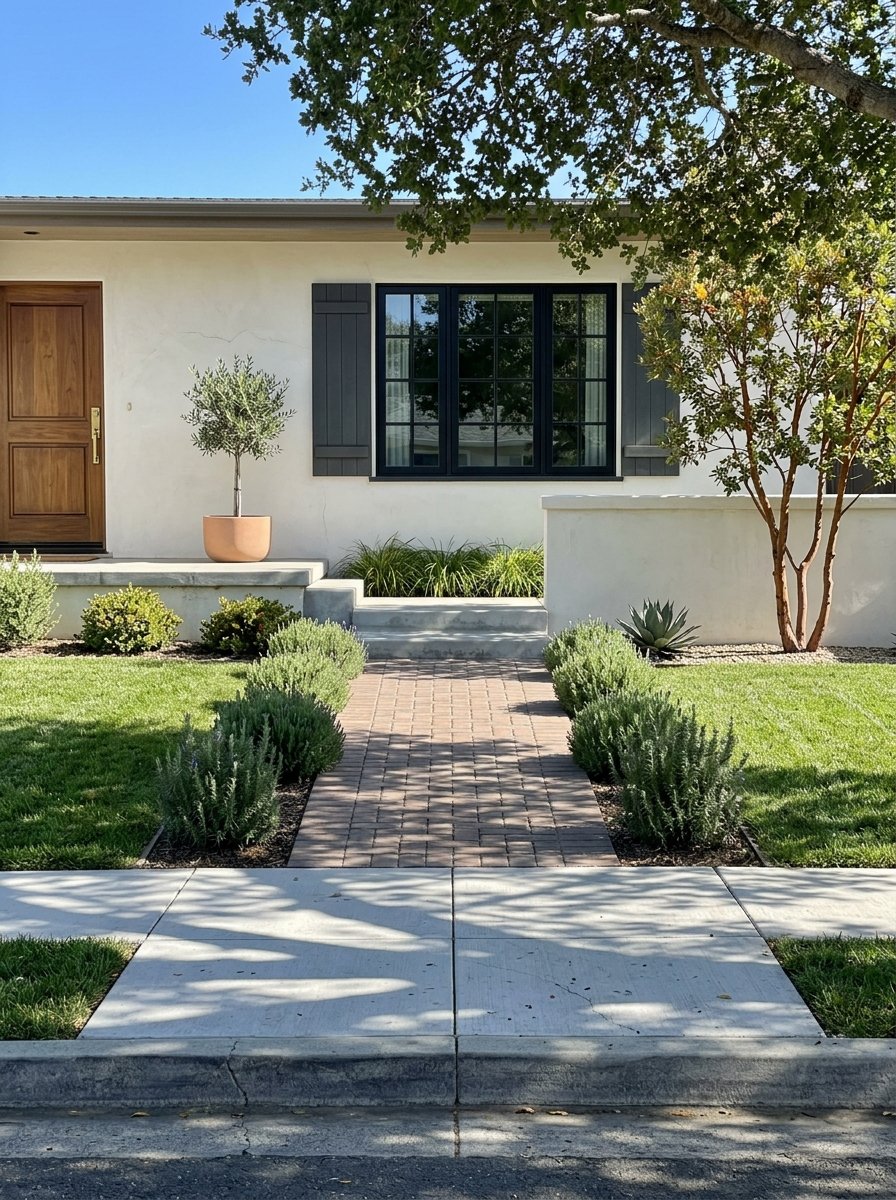
If you want to live in Sunnyvale and actually walk to coffee, dinner, groceries, or Caltrain, your search needs to be more precise than just picking the city. Sunnyvale can absolutely support a car-light lifestyle, but only in a few concentrated pockets. In this guide, you’ll see which neighborhoods offer the strongest walkable lifestyle, what kinds of homes you’ll find there, and what price ranges to expect so you can focus your search where it fits your goals. Let’s dive in.
Walkability in Sunnyvale
Sunnyvale is not uniformly walkable from end to end. Its citywide Walk Score is 60, with a Transit Score of 40 and a Bike Score of 78, which means daily errands can be manageable on foot or by bike in some areas, but not everywhere.
That distinction matters if walkability is a top priority for you. In practice, Sunnyvale works best as a pocketed walkability market, where a few central neighborhoods make a car-light routine realistic, while many other parts of the city still lean more car-dependent.
Walk Score identifies Heritage District, Washington, and East Murphy among Sunnyvale’s most walkable neighborhoods. For many buyers, the most practical target is the downtown core and the nearby blocks around Caltrain, Murphy Avenue, and Cityline.
Downtown Sunnyvale stands out
Downtown Sunnyvale is the clearest option if you want fewer car trips in daily life. Caltrain says Sunnyvale station opens onto Murphy Avenue, and the city describes Murphy Avenue as a popular dining and entertainment destination that is being converted into a pedestrian-only mall.
The downtown core also includes the 36-acre Cityline project, which the city describes as a mixed-use district with retail, dining, entertainment, and new residential and office uses. Current tenants include Whole Foods, AMC, Pacific Catch, Urban Plates, and ULTA Beauty, which helps explain why this area feels more convenient for day-to-day living than most of Sunnyvale.
If your ideal routine includes walking to the train, picking up groceries, meeting friends for dinner, and handling errands close to home, downtown Sunnyvale offers the strongest fit. It is not a zero-car environment, but it is one of the few places in Sunnyvale where driving can become the second choice instead of the first.
Best walkable Sunnyvale neighborhoods
Downtown Sunnyvale and Cityline
The downtown-adjacent housing mix is one of the biggest reasons this area attracts buyers seeking walkability. You’ll find condos, townhomes, apartments, and a smaller number of older single-family homes on the surrounding street grid.
As a useful proxy for the downtown core, ZIP code 94086 has a Walk Score of 64 and a median listing price of about $1.4825 million. Current examples in this area include 2-bedroom condos around $699,000 to $888,000, larger condos and townhomes around $999,000 to $1.35 million, and renovated single-family homes around $1.65 million to $2.49 million.
This range gives buyers options at different price points, especially compared with neighborhoods where detached homes dominate. If you want walkability without stretching to the highest single-family price tiers, downtown condos and townhomes may offer the most realistic path.
Heritage District
Heritage District is one of the most important neighborhoods to consider if you want a walkable location with a more classic residential feel. The city describes it as Sunnyvale’s oldest residential area, bounded by Maude, Wolfe, Old San Francisco, and Mathilda, with 69 historic homes or streetscapes and four national landmarks.
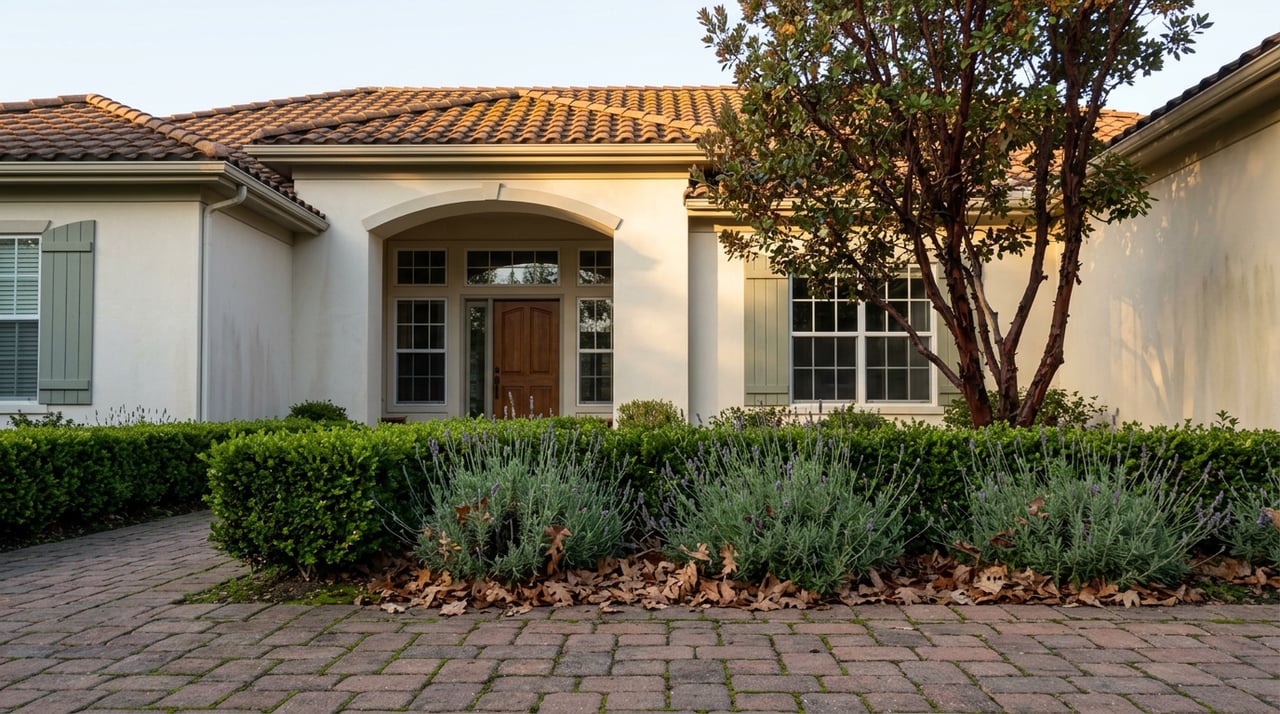
The housing stock is still mostly modest single-family bungalows from the 1930s to 1950s, along with some condominium options. Market data places Heritage District at about a $1.4525 million median listing price and around a $1.65 million median sale price.
For many buyers, Heritage District offers a useful middle ground. You stay close to the downtown grid and its conveniences, but the neighborhood itself tends to feel more residential in housing pattern and character.
East Murphy and West Murphy
East Murphy and West Murphy are also strong candidates if you want central access and practical walkability. Realtor.com shows median listings around $1.44 million to $1.45 million, while Redfin places West Murphy’s median sale around $1.6 million.
These neighborhoods share some of the same advantages as the larger downtown area. You are close to the central street network, near dining and services, and better positioned for on-foot errands than in much of the rest of Sunnyvale.
For buyers comparing central neighborhoods, these areas are especially worth watching because they can combine location benefits with a range of housing styles. The tradeoff is that inventory can be limited, and the premium often reflects the block-by-block convenience.
Caltrain-adjacent blocks to watch
W California, E Evelyn, and S Fair Oaks
If your version of walkability includes transit, the blocks around W California, E Evelyn, and S Fair Oaks deserve close attention. These station-adjacent streets are among the best fits for buyers who want walking to be built into everyday life rather than treated as an occasional perk.
Redfin’s 94086 listings show a broad range here, including smaller condos around $699,000 to $899,000, mid-size condos and townhomes around $1.17 million to $1.35 million, and larger or updated single-family homes around $1.75 million to $2.49 million. That makes this corridor one of Sunnyvale’s most practical choices for buyers who want to prioritize rail access, groceries, dining, and services.
Still, it helps to keep expectations realistic. Sunnyvale’s citywide Transit Score is 40, so even in its strongest walkable pockets, the better framing is usually fewer car trips, not fully car-free living.
What homes cost in walkable areas
Across Sunnyvale’s walkable pockets, pricing tends to follow a fairly clear structure based on housing type.
| Housing type | Typical price range |
|---|---|
| Condos | About $850,000 to $1.7 million |
| Townhomes | About $1.4 million to $1.9 million |
| Single-family homes | Mid-$1 millions to $2.5 million+ |
Current downtown-adjacent examples show that condos can start lower, with some around $699,000, while larger or newer units can rise well above $1 million. Townhomes in 94086 are often seen around $1.17 million to $1.35 million, with larger or newer homes pushing above $2 million.
Single-family homes in Sunnyvale’s walkable pockets usually command the highest premium. In places like Heritage District and the central downtown grid, buyers are often paying for a combination of location, lot pattern, and renovation quality more than brand-new construction.
The tradeoffs to expect
Walkable living in Sunnyvale comes with clear benefits, but it also comes with tradeoffs. The most walkable areas often feature older bungalows, compact lots, and a limited condo supply compared with larger suburban-style neighborhoods.
That means your purchase decision may come down to what matters most. If walkability is your top goal, you may accept less square footage, an older floor plan, or a smaller lot in exchange for being closer to downtown and Caltrain.
For some buyers, that tradeoff is easy. For others, it helps to compare whether you want the convenience of a central location, the space of a less walkable neighborhood, or a balance between the two.
Sunnyvale vs nearby options
If you are also comparing nearby cities, the differences are helpful to know. Mountain View has a stronger walkability profile overall, with a citywide Walk Score of 66 versus Sunnyvale’s 60, and some areas near San Antonio Caltrain score much higher.
Mountain View also tends to price that convenience in. Realtor.com says Mountain View’s median listing price is $1.73 million, and Old Mountain View sits around a $2.20 million median listing price.
Santa Clara is slightly less walkable overall, with a citywide Walk Score of 58, though some subareas perform better. Realtor.com places Santa Clara’s median listing price at about $1.50 million.
For many buyers, the practical takeaway is simple. Mountain View has the strongest walkability brand, Santa Clara has a few standout pockets, and Sunnyvale offers the best car-light lifestyle in a handful of downtown and Caltrain-adjacent neighborhoods.
How to shop for walkability
If walkability is one of your top priorities, it helps to define what that word means for your routine before you start touring homes. For one buyer, walkability means a quick stroll to Caltrain. For another, it means groceries, dinner, and everyday services within easy reach.
As you compare Sunnyvale neighborhoods, focus on a few questions:
- Do you want to walk to Caltrain regularly?
- Is grocery access more important than nightlife or dining?
- Are you open to a condo or townhome, or do you want a detached home?
- Would you trade lot size for a more central location?
- Is a bike-friendly routine enough, or do you want most errands to be walkable?
These answers can narrow your search quickly. In Sunnyvale, the difference between a home that sounds central on paper and one that truly supports your daily lifestyle can come down to just a few blocks.
If you want help comparing those blocks in a practical, data-driven way, Edelino Chen can help you evaluate where walkability, housing type, and price line up best for your goals.
FAQs
Which Sunnyvale neighborhoods are most walkable for buyers?
- The strongest walkable pockets are downtown Sunnyvale, Heritage District, East Murphy, West Murphy, and the Caltrain-adjacent blocks near W California, E Evelyn, and S Fair Oaks.
Is downtown Sunnyvale truly walkable for daily errands?
- Downtown Sunnyvale is the city’s clearest option for a car-light lifestyle, with access to Murphy Avenue, Cityline, groceries, dining, entertainment, and Caltrain.
What does a walkable home in Sunnyvale cost?
- In Sunnyvale’s walkable areas, condos generally range from about $850,000 to $1.7 million, townhomes from about $1.4 million to $1.9 million, and single-family homes from the mid-$1 millions to $2.5 million or more.
Is Sunnyvale more walkable than Mountain View or Santa Clara?
- Sunnyvale is less walkable than Mountain View overall and slightly more walkable than Santa Clara overall, but all three cities have specific neighborhoods that perform better than their citywide averages.
Can you live in Sunnyvale without a car?
- In most cases, Sunnyvale is better described as supporting fewer car trips rather than completely car-free living, even in its most walkable neighborhoods.
What housing types are common in Sunnyvale’s walkable areas?
- The walkable pockets near downtown usually have a mix of condos, townhomes, apartments, and a smaller number of older single-family homes, while Heritage District is known for older bungalow-style homes with some condo options.