Buying into Cupertino without single-family home prices can feel impossible. If you want Cupertino’s commute convenience and public school access but need a smarter first step, a condo may be your best path in. In this guide, you’ll learn price realities, where condos tend to cluster, how to review HOA documents, financing options, and what drives long-term value. Let’s dive in.
Why start with a condo in Cupertino
Condos are the most common entry point into Cupertino’s housing market. Citywide home values for single-family homes sit far above most condo prices, while many Cupertino condo listings cluster under $1 million. Inventory is limited, so competition often concentrates in a few well-run complexes.
As a directional snapshot, recent city pages show typical condo listing medians around these levels as of March 2026: Cupertino roughly $998K, Sunnyvale roughly $898K, and Santa Clara roughly $733K. These figures change over time, but they help you compare nearby options while staying close to major employers.
What that means for you
- You can often buy into Cupertino neighborhoods at a materially lower price than a single-family home.
- Because condo supply is small, being pre-approved and ready to move on a specific complex can make the difference.
- School boundaries, walkability to Main Street Cupertino and the Vallco area, and commute routes often drive demand as much as unit size.
What types of Cupertino condos you’ll see
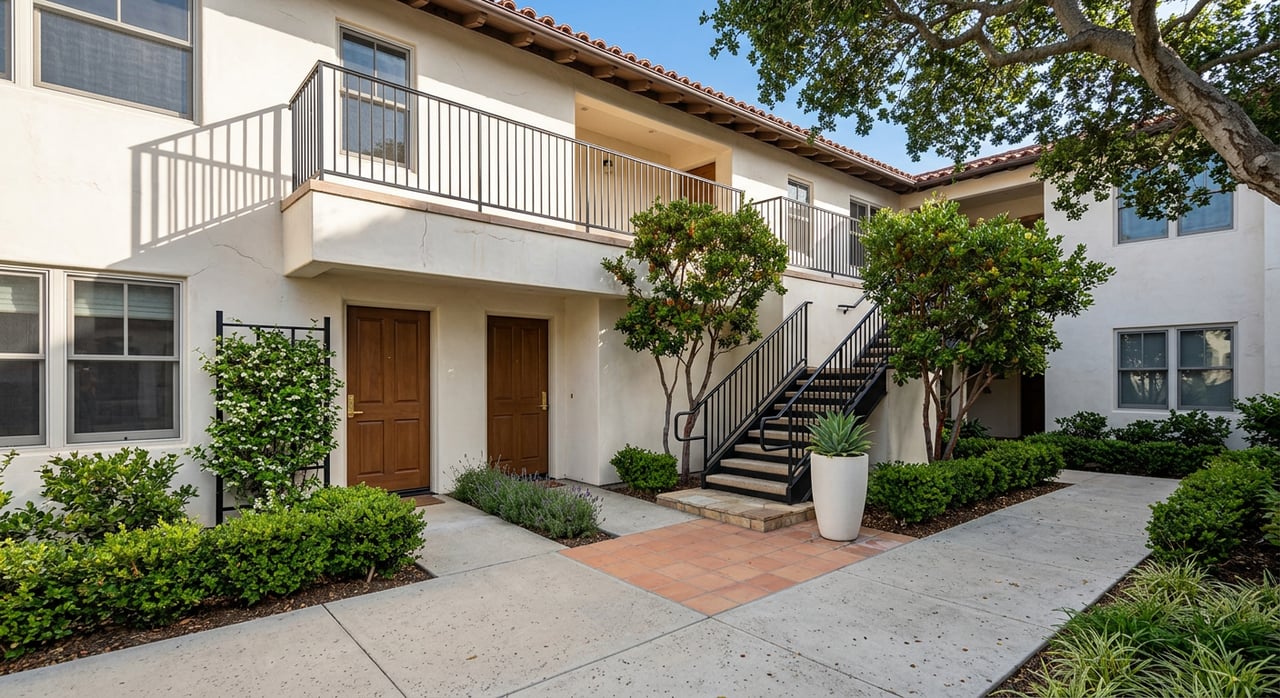
You’ll find a mix of low-rise garden-style condos from the 1970s–1990s, attached townhome-style condos, small mid-rise buildings, and a few conversions. Low-rise walk-ups tend to offer more supply and lower price points, but you should pay attention to aging systems and HOA reserves. Townhome-style condos can deliver more space and private entries that some lenders treat differently during underwriting.
Location details matter. Proximity to shopping, parks, major tech campuses, and Cupertino’s centers can add day-to-day value. Always confirm which public schools a specific address is zoned for, since boundaries vary. You can start with the Cupertino Union School District overview and then verify a particular address directly with the district. See the district’s overview page for context at the Cupertino Union School District site.
Do your HOA homework
When you buy a condo, you buy into a shared budget and building plan. Ask for these items during escrow:
- Recorded CC&Rs, Bylaws, and Articles of Incorporation.
- The last 2–3 years of HOA financials: budget, balance sheet, income statement, delinquency report, and the latest reserve study.
- The reserve study and funding plan. California law requires a full study every 3 years with annual reviews. Learn more about reserve study requirements under Civil Code 5550 at the Davis-Stirling resource.
- The HOA’s insurance certificate describing the master policy, coverage type, and deductibles, and whether the association has considered earthquake coverage.
- Board meeting minutes from the last 12–24 months and any disclosures on pending or threatened litigation.
- Rules on rentals, parking, storage, pets, and any special assessments.
Why this due diligence matters
- Reserve health and special assessments. Underfunded reserves can lead to surprise assessments that raise your monthly costs. Ask for the percent-funded ratio and any planned capital projects. See reserve disclosure requirements under Civil Code 5550.
- Balcony and exterior inspections. California’s Civil Code 5551 requires inspection of exterior elevated elements like balconies and decks. Many associations completed or scheduled these inspections for 2024–2026. Request any SB-326/Section 5551 inspection reports and repair estimates because they can affect carrying costs and future resale.
- Insurance and earthquake risk. HOA master policies typically cover the building shell and common areas. You still need an HO-6 (condo) policy for your interior finishes, personal property, loss assessment coverage, and additional living expenses. Standard policies exclude earthquake damage. Review earthquake coverage options for condo owners through the California Department of Insurance.
- Litigation and delinquency. Active litigation, high delinquency on dues, or structural and insurance deficiencies can limit conventional financing access. This can shrink your future buyer pool and impact resale value.
Financing a Cupertino condo
Financing condos has extra layers because lenders review the building too.
FHA, VA, and single-unit approvals
If you want FHA financing, check whether the condominium project is on the FHA-approved list. If not, your lender may be able to pursue a HUD single-unit approval, which adds time and documentation. Review FHA condominium project approval policy and the single-unit approval process on HUD’s site.
Conventional loans and “warrantable” projects
Fannie Mae and Freddie Mac consider a project’s reserves, owner-occupancy mix, commercial space, insurance, delinquency, and litigation when determining if a condo is warrantable. If a project does not meet guidelines, you may need a portfolio loan with different terms. See Fannie Mae’s condo project eligibility guidance for details.
Down payment assistance options
CalHFA’s MyHome Assistance Program provides a deferred-payment junior loan that can contribute up to about 3 percent with conventional financing or about 3.5 percent with FHA, when paired with eligible CalHFA first mortgages. Program rules include first-time buyer, income, and education requirements. Review current details on the CalHFA MyHome Assistance Program page. You can also check CalHFA’s list of homebuyer programs for statewide options and then verify with a CalHFA-approved lender.
Lender checklist to ask up front
- Is the project FHA approved, GSE-eligible, or will it require a single-unit approval?
- What down payment and PMI will this condo require at my price point? Will it be a conforming or jumbo loan?
- Will any HOA special assessments, litigation, high rental ratios, or reserve shortfalls affect approval or pricing?
- What HO-6 coverage and loss assessment limits does the lender require, given the HOA’s master deductible and earthquake exposure?
Budgeting for monthly costs
Beyond principal and interest, budget for:
- HOA dues. These vary by building age, size, amenities, and current insurance and seismic work. In Silicon Valley, dues can be higher than national medians. Always review the specific association budget rather than relying on averages.
- Property taxes. Estimate roughly 1.1 percent of purchase price plus any voter-approved assessments, then confirm with the county.
- Insurance. An HO-6 policy typically covers interior finishes, personal property, liability, loss of use, and loss assessment. Earthquake requires a separate policy from the California Earthquake Authority market or private carriers. See the California Department of Insurance earthquake guide for options and deductibles.
- Special assessments and reserves. If inspections point to upcoming work, set aside funds. Ask the board or management for any planned assessments over the next 12–24 months.
Plan for resale from day one
Thinking 5–10 years ahead helps you choose a condo that holds value.
- Public school assignment and neighborhood demand. Confirm which public schools serve the exact address with the Cupertino Union School District and the high school district. School assignment and proximity to daily needs often influence long-term demand.
- HOA fiscal health. Well-funded reserves, predictable assessments, stable dues, and clean financials help attract more buyers and lenders later. Review reserve funding percentage and recent capital projects. See Civil Code 5550 for reserve study standards.
- Warrantability and financing access. Projects that remain GSE-eligible typically draw a wider buyer pool. Non-warrantable buildings can limit you to cash or portfolio financing buyers.
- Building age and structural issues. Review any SB-326/Section 5551 balcony reports and timelines. Older wood-framed buildings may have near-term repair needs.
- Livability features. Two parking spaces, in-unit laundry, private outdoor space, extra storage, and flexible floor plans can improve enjoyment and resale appeal.
Should you also consider Sunnyvale or Santa Clara?
If you like Cupertino but want more options, comparing nearby cities can help.
- Price context. Directionally, March 2026 city snapshots show medians around $998K in Cupertino, $898K in Sunnyvale, and $733K in Santa Clara. Prices shift, but the pattern often holds.
- Commute and lifestyle. Staying near key employers is still possible, and some complexes may offer newer construction or different amenity mixes.
- School boundaries. If specific public school boundaries are a priority, confirm them for the exact address before writing an offer, since boundaries differ by city and district.
Your step-by-step game plan
Get pre-approved with a lender experienced in Silicon Valley condos. Ask about FHA vs conventional, project warrantability, and any extra conditions tied to HOA documents.
Define your target budget and monthly number, including HOA dues, HO-6 insurance, and a line item for earthquake coverage.
Identify your top 2–3 condo complexes or micro-areas near your daily routes or preferred Cupertino centers. Focus helps you move quickly when a unit hits the market.
Tour available floor plans to confirm layout, light, storage, and parking work for your needs.
Once in escrow, request and read the HOA package: financials, reserve study, minutes, insurance certificate, litigation disclosures, and rules.
Ask for any SB-326/Section 5551 inspection reports and related repair plans or assessments.
Coordinate with your lender on project review items early. If a single-unit approval or extra underwriting is needed, update timelines and contingencies.
Before removing contingencies, confirm your HO-6 policy limits, loss assessment coverage, and earthquake plan based on the HOA’s master policy deductibles.
Looking for a clear plan tailored to your goals and language preferences? Work with a local advisor who combines market data with hands-on condo experience. Connect with Edelino Chen for a no-pressure strategy session in English, Mandarin, or Cantonese.
FAQs
What do Cupertino condo prices look like for first-time buyers?
- As a directional snapshot for March 2026, city pages show typical condo listing medians around $998K in Cupertino, with nearby Sunnyvale and Santa Clara often lower; figures change over time and by complex.
Which HOA documents should I review before buying a Cupertino condo?
- Request CC&Rs, Bylaws, Articles, 2–3 years of budgets and financials, the latest reserve study and funding plan, insurance certificate, board minutes, litigation disclosures, and rules on rentals, parking, storage, and pets.
What is SB-326/Section 5551 and how could it affect me?
- California requires inspection of exterior elevated elements like balconies and walkways; ask for any inspection reports and repair plans because they can lead to special assessments or timelines that affect costs and resale.
Can I use FHA to buy a Cupertino condo?
- Yes, if the project is FHA-approved or you obtain a single-unit approval; confirm status and timeline with your lender early because single-unit approvals add paperwork and can impact a competitive escrow.
What makes a condo “warrantable” for a conventional loan?
- Lenders review project reserves, owner-occupancy, insurance, commercial space, delinquency, and litigation; projects that meet Fannie Mae and Freddie Mac standards are typically eligible for conventional financing.
Is down payment assistance available for Cupertino condos?
- CalHFA’s MyHome Assistance Program can provide a deferred junior loan alongside eligible first mortgages, subject to income, education, and first-time buyer rules; check current details with a CalHFA-approved lender.